- In an interview with the software company Can Do, project management expert Klaus Wiedemann explains the problems that can arise in companies when transitioning from assembly-line work to project-oriented work
- Estimating effort and implementation time are particularly problematic in software projects
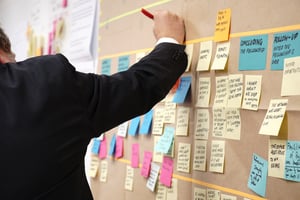 According to project management expert Klaus Wiedemann, the greatest challenge in introducing project-oriented work methods lies in adapting the established processes and structures of the line organization. When adapting to the requirements of project management, one must always weigh what is feasible against what is desirable, says Klaus Wiedemann in a conversation with Can Do, the developer of the project management software Can Do project intelligence. For example, time tracking and project tracking are particularly problematic in large corporations: “This immediately becomes a matter for the works council, but on the other hand, it’s necessary if you want to iteratively improve effort estimates for projects,” he explains.
Utopian Requirements, Especially in Software Projects
According to the computer science graduate, IT projects in particular often suffer from an excessive “degree of freedom in the requirements”: “With software projects, it can happen that the user would like a car that goes 500 km/h, has a payload of ten metric tons, and offers space for a large family—but doesn’t need any fuel,” says Klaus Wiedemann. Furthermore, he notes that it is very difficult in software projects to account for the “uncertainty in effort estimates and implementation time.” Furthermore, developer productivity can vary extremely widely in some cases, which makes planning even more difficult, according to the project management expert, who is currently advising a DAX-listed company in the Program Management Office of a major project.
Klaus Wiedemann, who also advises companies on startup ventures, recommends that startups and freelancers practice strict priority management. In addition to setting medium- and long-term goals, he says, it’s also helpful to know what you don’t want to do. The next step is to decide “how much time one wants to—or needs to—spend on certain topics.” Since he hadn’t found a suitable tool that met his needs in his work as an independent consultant, he developed the self-management software DAISHO, which handles appointment coordination, contacts, time planning and budgeting, task management, and email organization.
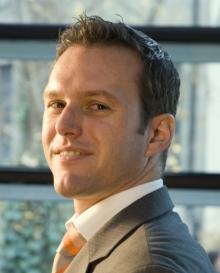 About Klaus Wiedemann
Klaus Wiedemann has been working in the fields of project management and business development for more than 18 years. A computer science graduate, he has primarily worked in the IT, financial services, automotive, and venture capital sectors and has been employed by companies such as Accenture, BayTechVenture, and a number of DAX-listed corporations. In 2006, Klaus Wiedemann founded the consulting and software company Daisho Blacksmith, which offers consulting services in the field of project management and has developed the personal information management tool DAISHO. He is currently advising, among others, a DAX-listed corporation in the Program Management Office of a major project.
Contact:
Daisho Blacksmith GmbH
Klaus Wiedemann
Landsberger Straße 293
D-80687 Munich, Germany
Phone: +49-89. 58 90 98 98 – 0
Email: info@daisho-blacksmith.com


 Redaktion : 18.11.2026