Rudolf Randus, managing director of the Vienna-based Can Do partner makeit information systems GmbH, is a recognized expert in process and project management. In this capacity, he also serves as a course instructor at WIFI Vienna, Austria’s largest adult education center. In an interview with the magazine *WIFI Aktuell*, he explains the importance of project competence in companies and in professional life.
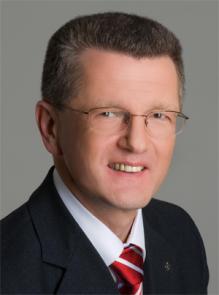 Rudolf Randus
, Can Do Partner in Austria
Shorter Cycles, More Efficient Projects
Companies are facing ever-shorter product cycles. Processes, goals, and workforce planning must adapt to market changes at an ever-faster pace. Professional decision-making and project execution are becoming increasingly important. “Within companies, there is increased competition for expert resources between line management and project tasks,” explains Rudolf Randus.
Focus on Resources and Capacity
Rudolf Randus believes that project planning must place greater emphasis on comprehensive resource and capacity management. “Resources deployed in both line and project operations must be viewed as a whole within the organization.” Project management skills are therefore also important for managers, as is an awareness of the sensible use of resources. Competencies must therefore be identified within the company and further developed in line with corporate goals. “This requires targeted development measures,” Randus notes.
Trend: Transparent Leadership and Development
Through forward-looking project portfolio planning, it is possible to accurately assess for the coming years whether the organization has sufficiently qualified employees available for upcoming projects or whether these employees will need to be developed through appropriate training and continuing education. Randus notes: “When making personnel decisions, project management skills are often required as an important general qualification—even for other jobs.”
Technical and Social Skills Form a Symbiosis
A wide range of skills is necessary for successful project work. “In addition to excellent project and process expertise, soft skills such as facilitation, good judgment of character, creativity techniques, and a solution-oriented approach are becoming increasingly important,” says Randus. Training programs for project managers are helpful because they follow a holistic training approach. “Compact in-house workshops on specialized topics—such as those offered by WIFI Vienna for corporate clients—have also proven effective,” explains Randus.

What role does the project manager play in the
organizational structure?
New career opportunities are emerging
This shift in skill sets also brings with it a wide range of new professional opportunities. “Today, companies offer two career development paths: one for careers in the line organization, and—increasingly in recent years—one for project managers in comparable pay grades,” the expert notes encouragingly. Whereas in the past one had to aim for a management position to advance in salary, today there are more and more specialized career models, including that of a project manager. “I think it’s wonderful that a shift in thinking is taking place and that companies are utilizing their core asset—their highly trained employees—in the best possible way based on their skills and preferences,” the management consultant says from experience.
Project Management at WIFI
The project management course offered by WIFI Vienna provides highly practical training that is recognized in the business world. Across 10 modules, participants gain not only in-depth technical knowledge of project management but also, through practical exercises, lay the foundation for applying what they’ve learned in real-world situations. Some modules focus intensively on creativity techniques, team and soft skills, as well as facilitation and presentation techniques. If sufficient practical experience as a project manager can be demonstrated, candidates may subsequently take the IPMA Level C certification exam.
Courtesy of WIFI Aktuell


 Redaktion : 19.11.2026
