How to Implement Accurate Skills Planning
 Redaktion : 16.11.2026
Learn how employee skills support better project staffing. Read Can Do’s English introduction to the Computerwoche ...


4 min read
Conflicting objectives, resource shortages and last-minute changes are part of almost every project today. How can you stay in control when capacity is limited and several projects are running at once?
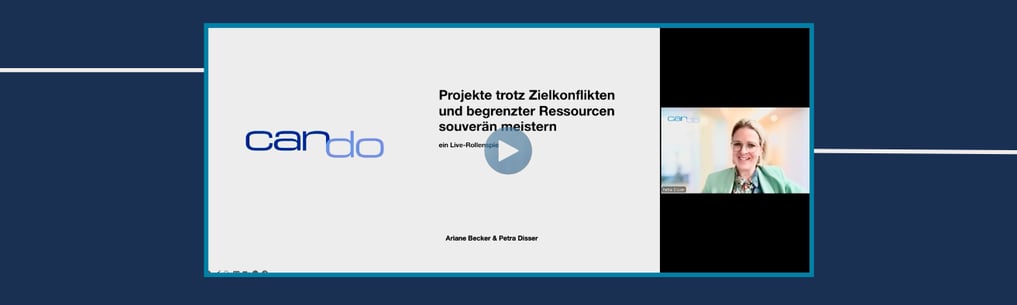
In the webinar “Managing Projects Confidently Despite Conflicting Objectives – A Live Role-Play”, hosted by Can Do in partnership with Projektmagazin, Petra Disser (Senior Consultant, Can Do) and Ariane Becker (Sales & Marketing, Can Do) demonstrated how to manage multiple projects and shared resources successfully in practice.
Using realistic scenarios, they showed how two project stakeholders coordinate resources, schedules and dependencies, focusing on resource conflicts, change requests, baseline management and transparent communication.
Project work has become part of everyday business. But does it actually work as intended?
“In almost every customer project, we ask ourselves: does project work function in everyday practice the way it looks on paper?” Petra asked at the start of the webinar.
Together with Ariane Becker, she took participants behind the scenes of a fictional project, from the excitement of planning to the first reality check.
“We wanted to show what happens when a well-crafted plan meets reality: when resources suddenly become unavailable, requirements change or plans simply no longer fit.”
The role-play made one thing clear: effective multi-project management means understanding where capacity is needed, which projects take priority and how to manage changes transparently.
What initially looked like everyday chaos became an example of how modern tools and clear communication create the foundation for confident decisions.
Conflicting objectives are inevitable. What matters is making them visible and finding a way to resolve them.
If you missed the webinar or would like to revisit particular scenes, you can watch the recording below.
In around 35 minutes, you will see:
The recording is ideal for project managers, PMOs and decision-makers who want a practical, tangible demonstration of modern project control. Please note: the video and its on-screen content are in German.
One highlight of the webinar was a classic resource conflict: two projects need the same key person, and neither side wants to give way.
“This is everyday life in multi-project management,” said Ariane Becker. “The question is not whether these conflicts arise, but how you deal with them.”
Using a live example in Can Do, the presenters showed how portfolio priorities can be set objectively, for example through a transparent assessment of project benefits and strategic importance.
“We do not make decisions based on gut feeling or on who pushes hardest,” explained Petra Disser. “Our portfolio prioritisation ensures that, when a conflict arises, it is clear which project takes precedence and why.”
A potential power struggle becomes a fact-based decision that everyone involved can understand.
The second scene focused on change requests, a familiar situation in any project. A customer suddenly asks for an additional interface, the go-live date is at risk and the necessary resources are unavailable.
“Many people see change requests as a disruption,” explained Petra Disser, “but they are part of sound project control, provided they are assessed transparently.”
During the webinar, she demonstrated how the tool makes the impact of a change request traceable: effort, duration, resource requirements and schedule changes. “Only an up-to-date baseline makes it clear how the project has changed and which decisions have been made.”
This turns a change request into a tool for managing the project.
Escalations are a sign of professional management, rather than failure.
“We need escalations to make informed decisions,” emphasised Ariane Becker. “Sometimes an issue is simply too big to resolve at project level. The decision then needs to move to the people authorised to set priorities.”
The live role-play showed how fact-based communication builds trust. Project managers and line managers share the same data, speak the same language and can prepare decisions properly. The result is less friction, greater accountability and faster decisions.
The webinar made it clear that project management only works when communication, transparency and tools work together.
“What matters is that project managers and line managers steer together, based on facts rather than emotions,” Petra Disser concluded.
Can Do helps organisations do exactly that through intelligent resource and project planning that makes conflicts visible, simulates scenarios and enables teams to act confidently, even in complex environments.
👉 Book a demo and see Can Do in action
When several projects run in parallel, they often compete for the same resources or face overlapping deadlines. Without a shared, transparent overview, delays, overload and inefficient decisions can follow. The key is to identify these conflicts early and resolve them using facts.
Resource conflicts are best resolved through transparency and clear decision-making rules. A central resource management tool such as Can Do shows workloads and availability in real time, allowing priorities to be set based on facts. Decisions need to be understandable and independent of personal influence.
Change requests are part of everyday project work. They show that a project can respond flexibly to new requirements. What matters is that every change is assessed, documented and communicated, including its impact on the budget, schedule and resources. This makes change requests a tool for project control rather than a disruption.
Can Do supports teams with intelligent resource and project planning. The software simulates scenarios, identifies risks automatically and shows how changes affect schedules and priorities. This enables project managers and line managers to make fact-based decisions, allocate resources effectively and manage projects confidently.
Hosted by Can Do and Projektmagazin, the webinar demonstrated how project teams can succeed despite conflicting objectives. In a live role-play, Petra Disser and Ariane Becker showed how to handle resource conflicts, change requests and escalations professionally through clear communication, transparency and digital tools.
Can Do is the all-in-one solution for portfolio, project and resource management. Optimise your projects, resources and risks with Can Do, trusted by leading German companies.
Book a free demo to experience Can Do live in 45 minutes and discuss your questions directly with our experts.
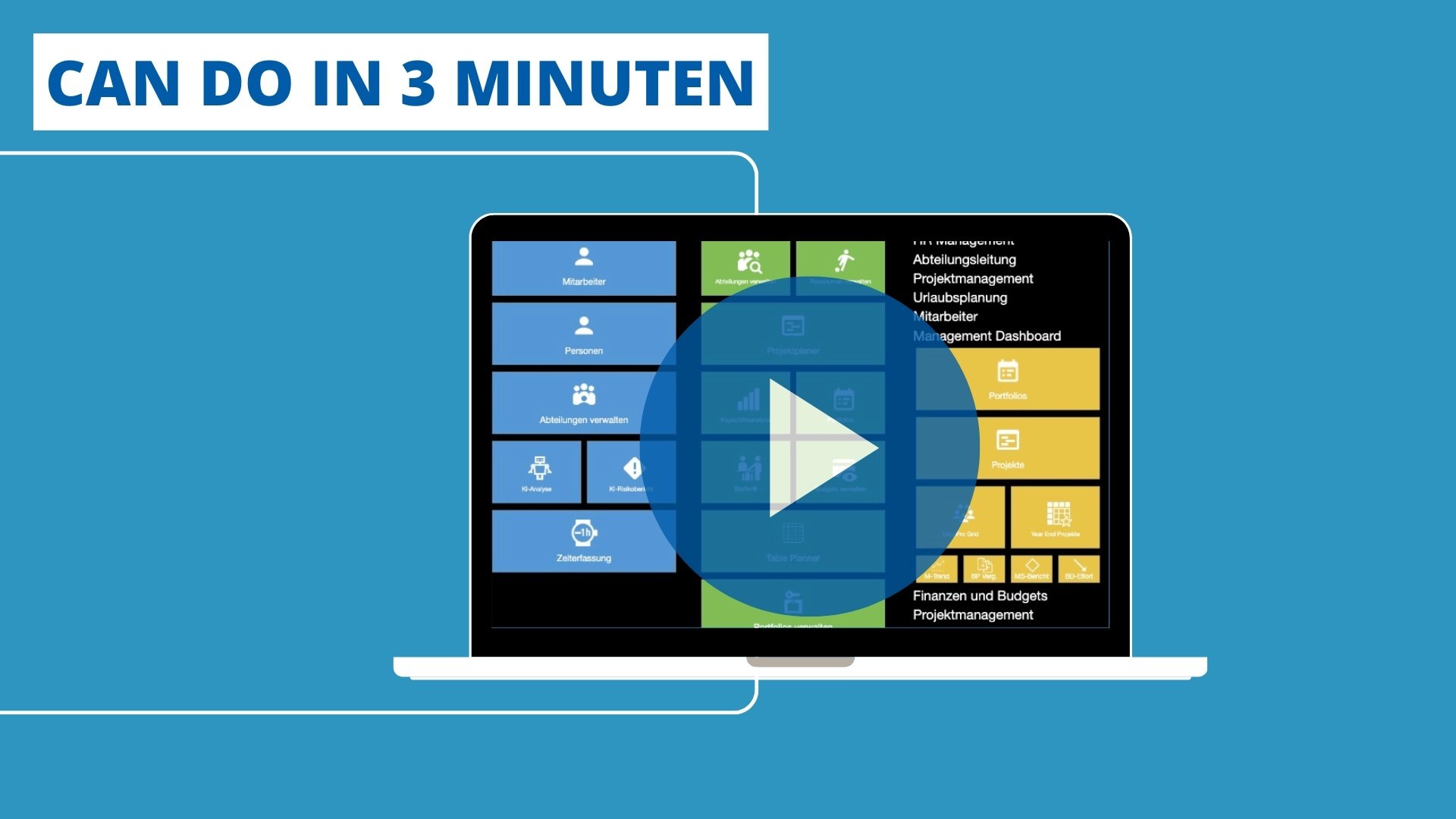
A quick introduction to Can Do (video in German): a three-minute overview of features, benefits and use cases.
 Ariane Becker
 is in continual exchange with interested parties from various industries. Her main focus is to bring the right information and suitable experts together and getting directly involved in the use cases and the software.
Redaktion : 16.11.2026
Learn how employee skills support better project staffing. Read Can Do’s English introduction to the Computerwoche ...
Redaktion : 16.11.2026
Explore portfolio systems, simulation and project approval in Can Do’s three-part project portfolio management series. ...
Redaktion : 16.11.2026
Archive: Can Do announced its Can Do Hours app for AI-supported time tracking and task planning at DIGICON 2018. Read ...